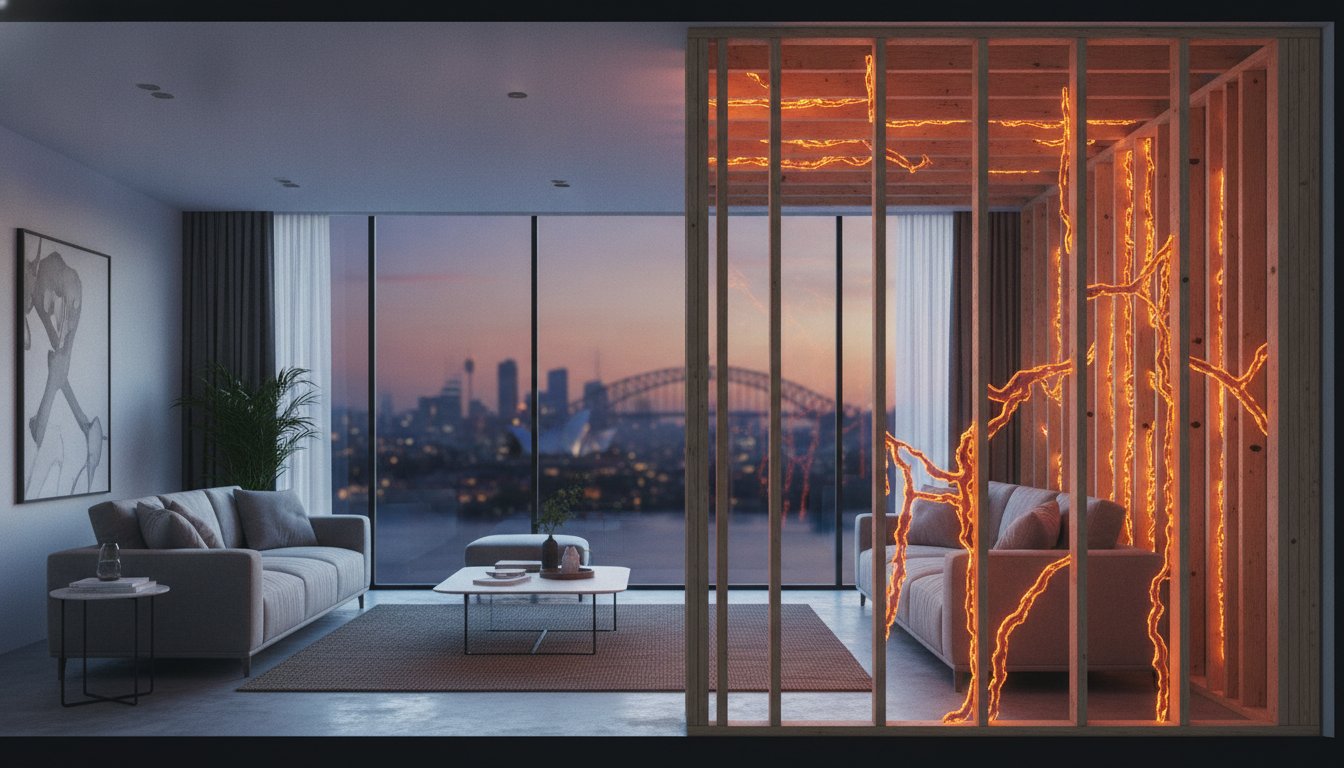
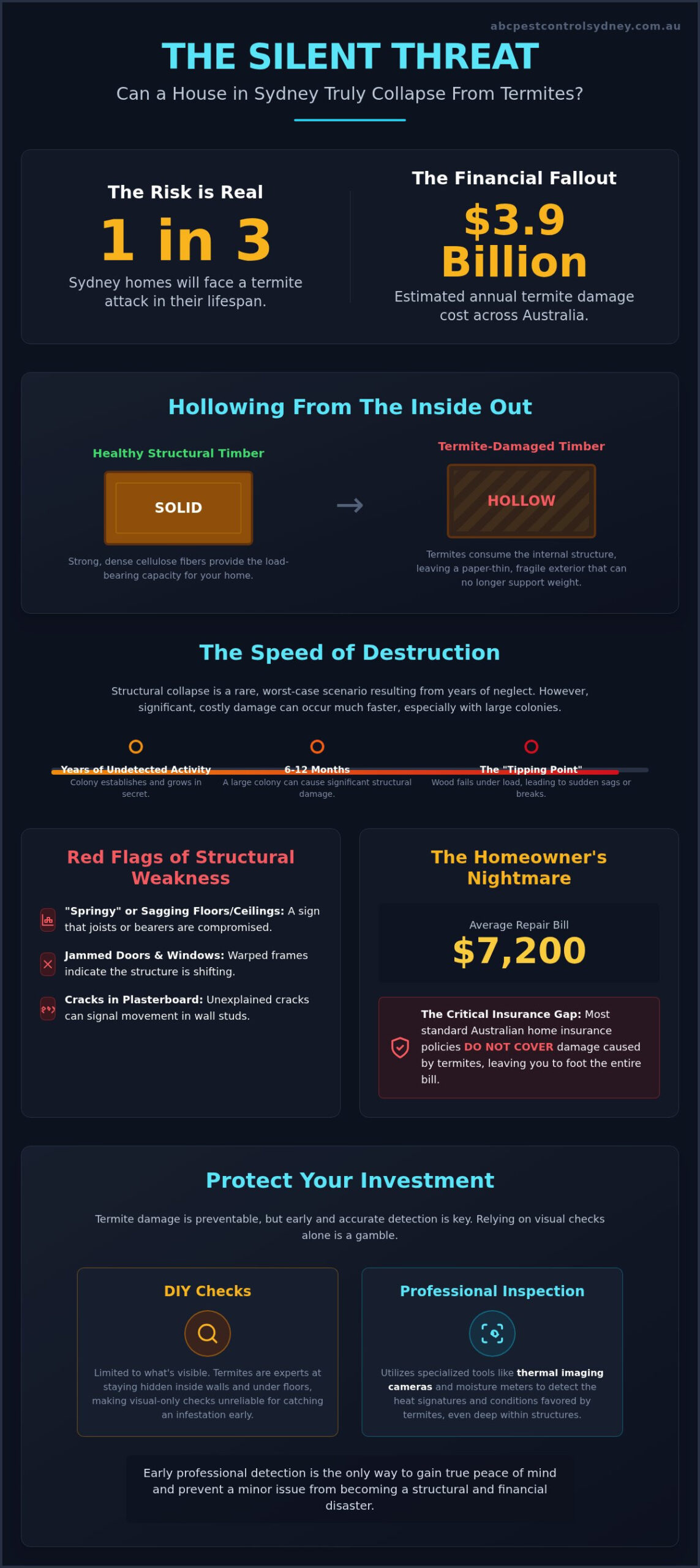
One in three Sydney homes will face a termite attack during its lifespan, often sustaining massive damage before the first sign appears. You are likely asking the critical question: can a house collapse from termites? It is a terrifying thought for any property owner. With annual termite damage in Australia estimated as high as $3.9 billion, your concern for your home’s structural integrity is both local and urgent.
We know the stress of wondering if your biggest investment is safe, especially since most insurance policies won’t cover these preventable repairs. This guide explains the reality of termite destruction and how to protect your Sydney home from structural failure. You will discover the specific timeline of timber damage, the red flags of a compromised frame, and how our 20 years of local expertise provides the safety of mind you need. Learn how to spot the warning signs before a $7,200 average repair bill becomes your reality.
Key Takeaways
- Understand the reality behind the question “can a house collapse from termites” and why structural failure typically follows years of undetected activity.
- Learn how termites act as an “invisible threat” by hollowing out structural timbers while leaving the exterior paint and veneer completely intact.
- Identify the specific red flags of structural compromise, including “springy” floorboards and doors that no longer close properly.
- Uncover the truth about the “insurance gap” and why most Australian policies leave homeowners footing the bill for termite-related repairs.
- Discover how professional thermal imaging and specialized inspections provide the safety of mind that DIY checks cannot offer.
Addressing the Fear: Can Termites Really Bring Down a Building?
The short answer is yes. While it’s a rare occurrence, a house can collapse from termites if an infestation is left untreated for many years. Structural failure is defined as the specific point where load-bearing timbers can no longer support the building’s weight. This isn’t a sudden event like an earthquake. It’s a slow, silent erosion of your home’s “skeleton.” Modern Australian homes are particularly vulnerable because many utilize softwood timber frames and concrete slabs that can hide entry points. These construction methods often provide termites with easy, concealed access to the very heart of the building. By the time the damage becomes visible on the surface, the internal strength of the timber may already be gone.
How Termites Compromise Structural Integrity
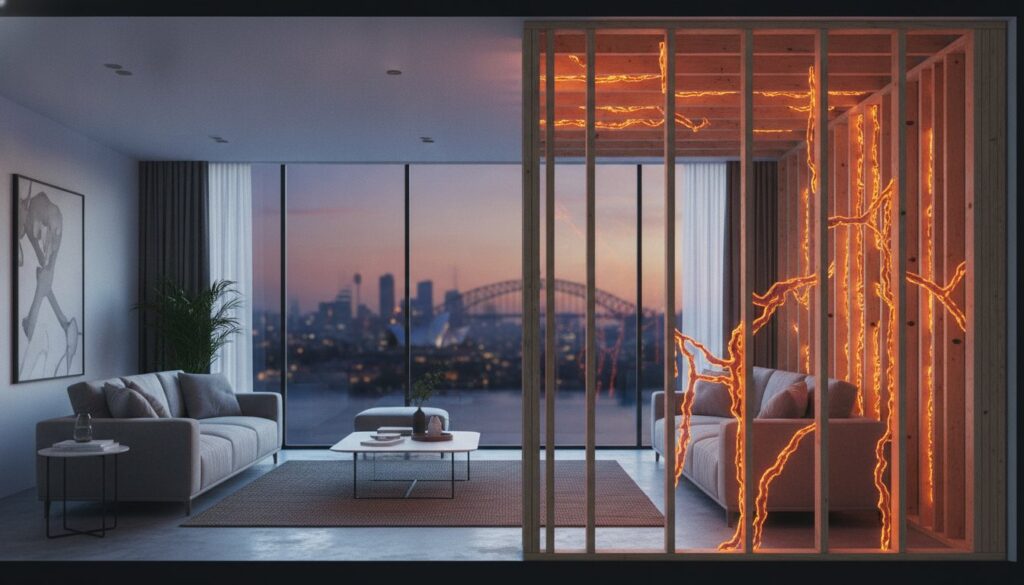
Termites target the most critical parts of your home’s structure. They focus on load-bearing elements such as bearers, joists, and wall studs. These insects consume cellulose, the organic compound found in wood that provides its strength. As they feed, they turn solid, heavy timber into a fragile honeycomb structure. The exterior often remains untouched, looking perfectly solid to the naked eye. You might only notice secondary damage when it’s already severe. Look for sagging floors, doors that suddenly jam in their frames, or mysterious cracks appearing in your plasterboard. These are signs that the “bones” of your house are failing. In extreme cases, the weight of the roof or upper floors can eventually cause the hollowed-out studs to buckle, leading to the catastrophic failure homeowners fear.
The Hidden Nature of Termite Infestations
You won’t usually see termites crawling across your living room floor. These pests are highly sensitive to light and open air, preferring the humid, dark environment inside your walls. For a comprehensive overview of termites and their biology, it’s clear they are designed for stealth. The destruction speed depends heavily on the colony size and the health of the queen, who can produce thousands of eggs daily. A large colony can work 24/7, eating through your investment without making a sound. Understanding what is a pest in the Sydney context helps homeowners realize that termites aren’t just a nuisance; they are a direct threat to your safety. When people ask can a house collapse from termites, they are often surprised to learn that the answer depends entirely on how long the colony has been allowed to feed in secret. Early intervention is the only way to ensure your property remains a safe place to live.
The Speed of Destruction: How Long Does It Take for a House to Collapse?
A common myth suggests that termites can devour a home over a single weekend. This is not true. However, these pests are active 24 hours a day, 365 days a year. They never sleep. While the process usually takes several years of sustained activity, the destruction is relentless. In Sydney, the question of can a house collapse from termites often comes down to the species involved and how long they have gone unnoticed. A large colony can cause significant structural damage within 6 to 12 months in ideal conditions. Understanding how to Identify and Control Them is vital for every property owner in New South Wales.
Environmental factors in Sydney significantly accelerate this timeline. Our region’s high humidity and warm temperatures create a perfect breeding ground. When timber remains moist due to poor drainage or leaking pipes, termites feed much faster. Damage often reaches a “tipping point” where the wood appears fine on the outside but has lost all load-bearing capacity internally. This is why a ceiling might suddenly sag or a floor might give way despite appearing perfect just weeks prior. The structural failure feels sudden, but the cause was years of silent, constant eating.
Subterranean Termites: Sydney’s Number One Threat
The most destructive local species in Sydney is Coptotermes acinaciformis. These are subterranean pests that live in massive underground colonies. In NSW, many homeowners refer to these destructive insects as white ants. A single colony can contain over a million individuals. With those numbers, the rate of timber loss increases exponentially. They don’t just eat the wood; they systematically hollow out the structural heart of your home. Because they travel through mud maps and underground tunnels, you won’t see them until the damage is extensive.
Factors That Accelerate Timber Damage
Several conditions turn a slow infestation into a high-speed disaster. Moisture is the primary driver. Leaking shower recesses, blocked gutters, or faulty air conditioning drainage provide the hydration termites need to thrive. Wood-to-ground contact acts as a direct highway into your structure. If garden mulch or timber decking touches the soil and your house frame, you are inviting trouble. It is also common for large Sydney properties to host multiple colonies simultaneously. This “pincer movement” can significantly shorten the time it takes for a building to become unsafe. If you are worried about these environmental risks, a professional termite assessment is the best way to secure your property’s future.
Red Flags: Identifying Structural Weakness Before It’s Too Late
Don’t ignore the subtle shifts in your home’s structure. Many Sydney homeowners dismiss a sticking door or a “springy” floorboard as simple house settling. This is a dangerous mistake. These symptoms often indicate that load-bearing timbers have already lost their internal strength. Early detection is the only way to prevent repair bills that far exceed the cost of a professional inspection. By the time visual signs appear, the infestation is usually well-established.
If you overlook these warnings, you risk reaching a critical point of structural failure. When people ask can a house collapse from termites, they are often looking for a specific moment of danger. In reality, that danger builds every day you delay action. Catching an infestation early can be the difference between a routine treatment and a total structural rebuild.
Visual Signs of Hollowed Timbers
Look closely at your timber surfaces for any irregularities. Blistered or bubbling paint on skirting boards often hides active feeding tunnels just beneath the surface. You should also perform the “Tap Test” on any exposed wood in your home. A solid, healthy piece of timber produces a sharp, dense sound when struck. If the wood sounds hollow or dull, the interior has likely been consumed. In advanced cases, the wood becomes paper-thin. You might find that a simple touch or a vacuum cleaner bump breaks right through the veneer. Learning the signs of termite infestation helps you identify these risks before the timber loses its density entirely.
Indirect Clues: Mud Tubes and Swarmers
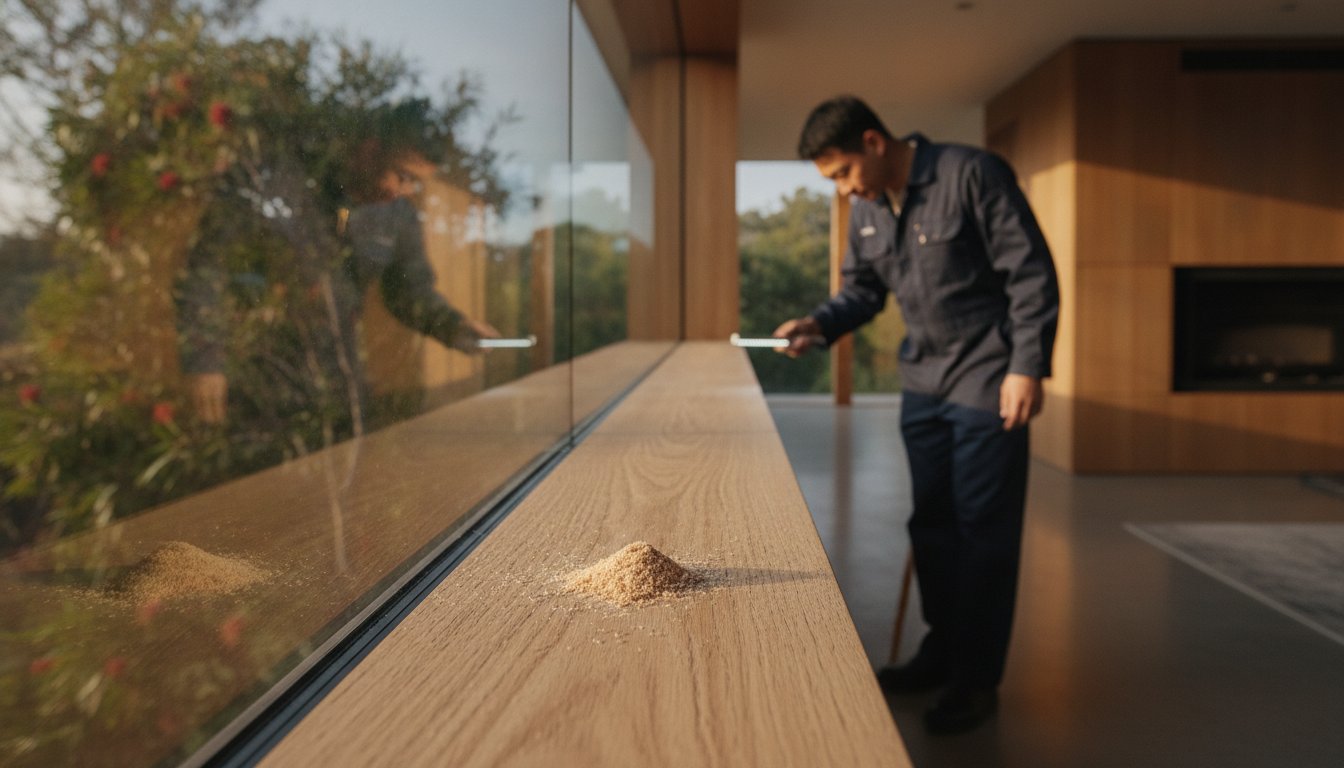
Termites leave physical evidence of their presence even when they stay hidden inside walls. Search for mud shelter tubes on your foundation walls, piers, or in the sub-floor. These tubes act as protected highways, allowing the colony to move from the moist soil into your home’s frame. You may also find termite “frass,” which looks like small piles of fine sawdust or coffee grounds. Finding discarded wings near windowsills or light fixtures is another major red flag. These wings come from “swarmers,” which are reproductive termites searching for a location to start a new colony. The presence of swarmers indicates a mature, active nest is already nearby. If you spot these clues, the question of can a house collapse from termites becomes an immediate priority for your property’s safety. Review our resources on Termite Damage: Early Signs and Prevention to understand how to secure your home.
The Financial Risk: Why Termite Damage is a Homeowner’s Worst Nightmare
Most Sydney homeowners assume their building insurance covers any major disaster. They are wrong. Standard Australian home insurance policies explicitly exclude termite damage. Insurers classify these infestations as “preventable” maintenance issues rather than accidental events. This “Insurance Gap” means that if you discover your wall studs are hollowed out, you are responsible for every cent of the repair. The question isn’t just can a house collapse from termites, but whether your bank account can survive the structural restoration. With average repair bills sitting at approximately $7,200 and severe cases reaching tens of thousands, the financial burden is often catastrophic.
Beyond the immediate repair bills, there is a heavy psychological toll. Living in a home with unverified structural integrity creates constant anxiety. Every creak in the floor or new crack in the plasterboard becomes a source of dread. You deserve to feel safe in your own living space. This safety of mind only comes through professional verification that your home’s “skeleton” remains sound. Ignoring the risk doesn’t just threaten your safety; it creates a lingering stress that affects your daily life.
Repair Costs vs. Prevention Costs
Replacing load-bearing beams is a complex engineering feat. It involves propping up the roof, stripping back walls, and installing new supports. This process is vastly more expensive than the cost of an annual professional inspection or a preventative barrier. Many people try to save money with DIY treatments, but these often fail. Hardware store sprays usually only kill the termites they touch, leaving the main colony to continue its work in secret. This leads to even more expensive professional interventions later when the damage is far worse. Understanding how much pest control costs in the context of long-term asset protection is essential for every property owner.
Protecting Your Asset’s Resale Value
Sydney’s real estate market is incredibly competitive, and buyers are cautious. Almost every serious purchaser will insist on a Pre-Purchase Pest Inspection. If a report flags a history of termite activity or unrectified structural damage, your property’s resale value will plummet. In many cases, a bad report can cause a sale to fail entirely. Conversely, having a professional termite management plan and a “Termite-Free” certification serves as a major selling point. It proves to potential buyers that you have proactively protected the building’s integrity. Don’t let a hidden colony eat away your home’s equity. Schedule a comprehensive termite inspection today to ensure your investment remains secure for the long term.
Protecting Your Sydney Home: Why Professional Inspection is Mandatory
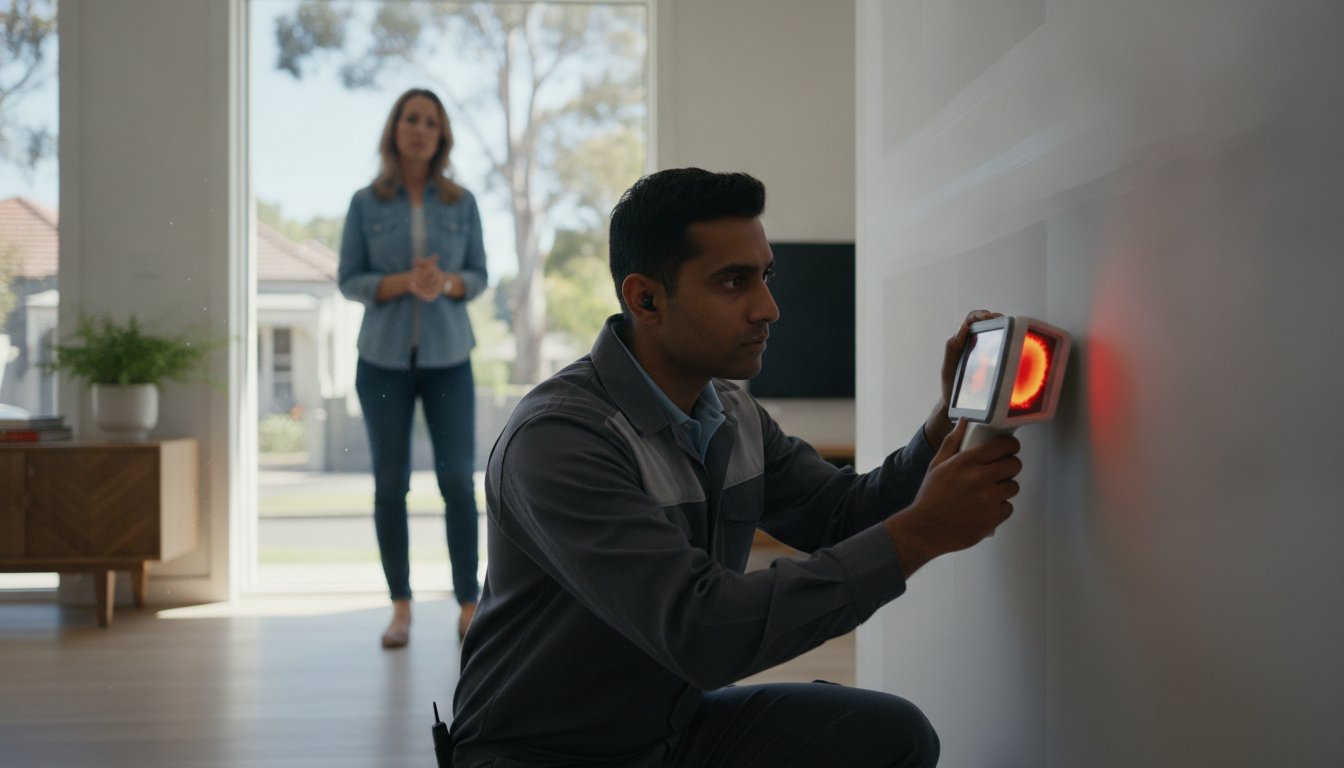
Sydney’s warm, humid climate is a paradise for wood-destroying insects. Because of this high-risk environment, an annual inspection is the absolute minimum requirement for every property owner. While you might try to spot signs yourself, the human eye has serious limitations. You cannot see through brick veneers or detect the heat signatures of a hidden colony deep inside a wall stud. We use professional thermal imaging and moisture meters to find what is invisible to you. With over 20 years of experience in the Sydney metropolitan area, ABC Pest Control Sydney specializes in these complex cases. We don’t just look for bugs; we assess the structural risk to ensure your home remains safe. Knowing that an expert has verified your property’s integrity provides the safety of mind you can’t get from a DIY check.
If you suspect activity right now, do not disturb the area. Tapping on mud tubes or spraying household chemicals will only cause the colony to retreat and reappear elsewhere in your frame. Call a specialist immediately to identify the entry points and assess the damage. When people ask can a house collapse from termites, the answer often depends on how quickly the homeowner stopped the silent destruction. Immediate action is the only way to prevent a manageable issue from becoming a structural nightmare.
The ABC Pest Control Sydney Approach
Our termite inspection Sydney process is thorough, transparent, and designed for modern convenience. We examine every accessible area, from the dark corners of the sub-floor to the furthest reaches of the roof void. Once we identify the threat, we develop customized treatment plans tailored to your specific building type. This might include high-quality chemical barriers or advanced baiting systems. We prioritize your family’s health by using eco-friendly and safe extermination methods. Our methodology ensures a total resolution of the problem while remaining respectful of your living environment and pets.
Long-Term Defense Strategies
Stopping an active infestation is only the first step toward safety. You need a permanent shield to prevent future attacks. We specialize in the installation of termite reticulation systems that provide ongoing, reliable protection for years. If you are planning a renovation or a new build, we offer pre-construction termite protection that complies with all national regulatory standards. This proactive defense is far more cost-effective than reactive repairs. We stand by our work with professional monitoring plans, giving you a “Peace of Mind” guarantee that your biggest investment is protected from structural failure.
Secure Your Home Against Silent Destruction
You now understand the reality behind the question: can a house collapse from termites? While a total building failure is rare, the erosion of your home’s structural integrity happens silently every single day. Sydney’s unique climate and aggressive local species make annual inspections a necessity, not an option. Don’t wait for sagging floors or jammed doors to signal a problem. By the time those red flags appear, the financial and structural damage is already well-established.
Protect your biggest investment and regain your safety of mind. Book Your Professional Termite Inspection Today with ABC Pest Control Sydney. With over 20 years of experience in the local market, we are specialists in high-difficulty infestations. We utilize eco-friendly and safe methods to ensure your family’s protection while providing a total resolution to your pest concerns. Take charge of your property’s future now. It’s the most effective way to ensure your home remains solid and secure for years to come.
Frequently Asked Questions
How long does it take for termites to destroy a house?
It typically takes several years of sustained activity for a colony to cause total structural failure. However, a large colony of subterranean termites can cause significant damage in as little as 6 to 12 months. Destruction speed depends on the species, colony size, and moisture levels in your home. While they won’t destroy a house in a weekend, their 24/7 activity ensures the damage is constant and relentless.
Does home insurance cover termite damage in Australia?
No, standard Australian home insurance policies do not cover termite damage. Insurers view termite infestations as preventable through regular maintenance and inspections. This leaves the homeowner responsible for all repair costs, which average $7,200 but can reach tens of thousands for structural beams. Because of this insurance gap, proactive inspections are the only way to avoid a massive financial loss on your Sydney property.
Can I tell if my house is structurally unsafe from termites?
You can look for signs like sagging ceilings, “springy” floorboards, or doors that no longer close properly. These symptoms suggest that load-bearing timbers have lost their density. However, the question of can a house collapse from termites is difficult to answer without professional tools. We use thermal imaging and moisture meters to verify the integrity of your home’s frame where the human eye cannot reach.
What are the first signs of termites in a house?
The earliest signs include mud shelter tubes on foundation walls, discarded wings near windows, or bubbling paint on skirting boards. You might also hear a hollow sound when tapping on timber. These indicators show that a colony is active and feeding on your home’s cellulose. Catching these red flags early is critical to preventing the catastrophic structural failure that homeowners fear most in high-risk areas like Sydney.
Are certain types of Sydney houses more prone to collapse?
Homes built since the 1960s with concrete slabs and softwood timber frames are at higher risk. These structures often have minimal ground clearance, making it easier for termites to enter undetected. Sydney houses in high-humidity areas or those with poor drainage are also more susceptible. Modern building materials are often less resilient to termite attacks than the heavy hardwood used in older, Federation-style properties.
How often should I get a professional termite inspection?
You should book a professional termite inspection at least once every 12 months. This is the industry standard in Australia to catch infestations before they become a major financial burden. If you live in a high-risk area or have a history of activity on your property, six-monthly checks provide better security. Regular monitoring is the only way to answer the question can a house collapse from termites with a definitive “no” for your property.
Can termites eat through concrete or metal to get to wood?
Termites cannot eat through concrete or metal, but they can exploit the tiny cracks within them. A gap as small as 2mm in a concrete slab is enough for a colony to enter your home. They will build mud tubes over metal surfaces to reach the timber they crave. Their ability to find these microscopic entry points is why professional barriers and regular inspections are mandatory for Sydney homeowners.
If I find termites, should I try to spray them myself?
No, you should never disturb or spray termites yourself with hardware store products. DIY sprays usually kill only the termites you see, which causes the rest of the colony to retreat deeper into the structure. This makes professional eradication much harder and allows the destruction to continue in a different area. Contact a specialist immediately to ensure the entire colony, including the queen, is safely and effectively eliminated.