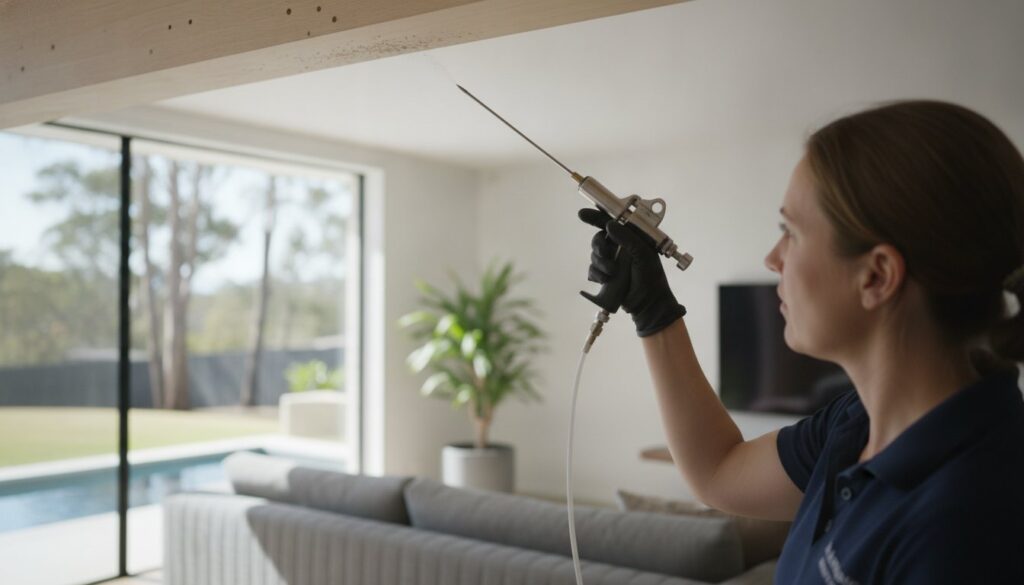
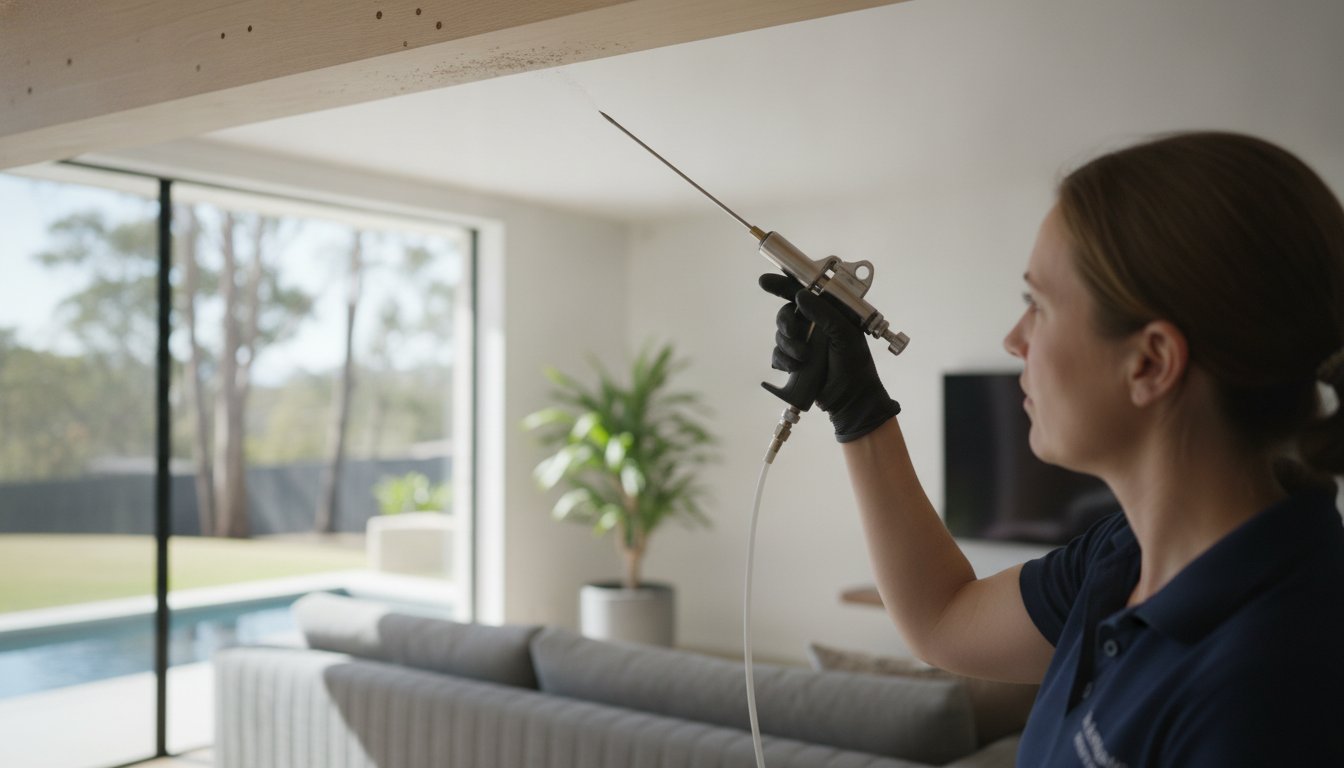
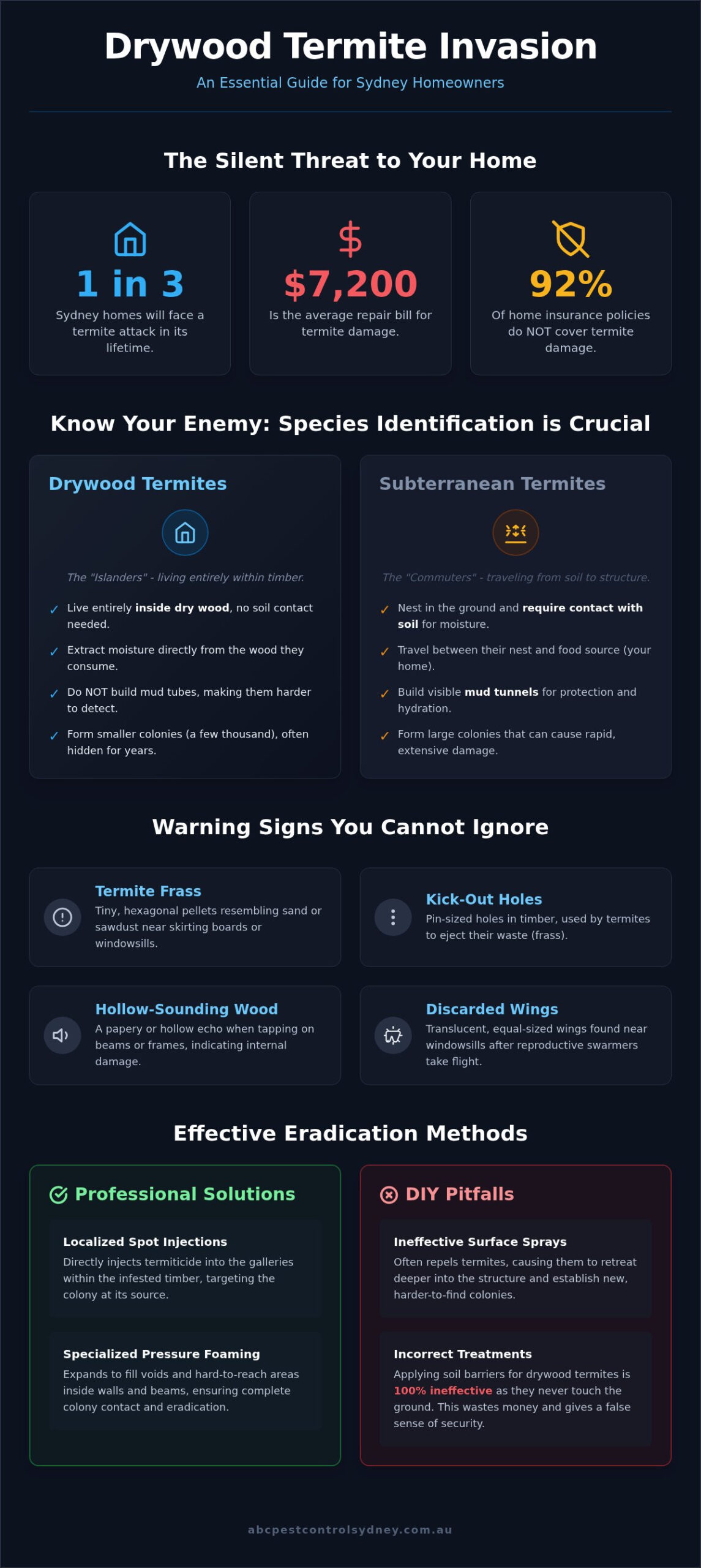
Did you know that 1 in 3 homes in Sydney will face a termite attack during its lifetime, causing more damage nationwide than fires, floods, and storms combined? When you notice tiny holes in your timber or mysterious piles of pellets near your skirting boards, your immediate priority is learning how to get rid of drywood termites before the average $7,200 repair bill lands on your doorstep. It’s stressful to realize your home is under siege, especially when 92% of Australian home insurance policies won’t cover the cost of the damage.
We understand the anxiety that comes with a potential infestation. You want a solution that is effective but safe for your family and pets. This guide provides the professional-grade clarity you need to identify these silent invaders and eliminate them using methods tailored for Sydney properties. We will explain how to distinguish drywood termites from their subterranean cousins and preview the specialized internal treatments that ensure complete colony eradication. By following these expert steps, you can secure your home’s structural integrity and finally enjoy true peace of mind.
Key Takeaways
- Identify the specific species correctly, as drywood termites live entirely within timber and do not require contact with the soil.
- Spot the critical warning signs like hexagonal frass pellets and pin-sized kick-out holes to stop damage before it spreads.
- Learn professional methods for how to get rid of drywood termites using localized spot injections and specialized pressure foaming.
- Avoid the dangers of DIY surface sprays that often cause colonies to retreat deeper into the structure instead of eliminating them.
- Ensure your home remains safe by applying expert-led solutions that meet Australian termite management standards for Sydney properties.
Drywood vs. Subterranean: Why Your Treatment Depends on Identification
Drywood termites are surgical invaders. Unlike the common subterranean species that most homeowners recognize, these pests don’t need the ground to survive. They live entirely within your timber, whether that’s a structural roof beam, a window frame, or a piece of antique furniture. If you apply a traditional soil barrier hoping to stop them, you are wasting your time and money. These barriers are 100% ineffective against an infestation that never touches the dirt. Understanding the specific biology of drywood termites is the only way to protect your property from long-term structural failure.
Sydney’s humid coastal climate creates the perfect environment for these pests. While they are known for surviving in dry wood, they still require a small amount of moisture. Our local salt air and humidity provide exactly what they need to thrive high above the ground. If you are trying to figure out how to get rid of drywood termites, you must first accept that the rules of engagement have changed. You aren’t fighting an army coming from the garden; you’re fighting a hidden colony already entrenched inside your walls.
The Biological Difference
Think of subterranean termites as commuters who need a highway to the soil to stay hydrated. They build elaborate mud tunnels to travel between their nest and your home. Drywood termites are islanders. They establish a colony inside a single piece of timber and may never leave it. Drywood termites are wood-dwelling insects that extract every drop of water they need directly from the timber they consume. They don’t build mud tubes, and they don’t need a connection to the earth.
These colonies are typically smaller than subterranean ones, often numbering only a few thousand members. However, their size makes them much harder to locate. Because they don’t leave a trail of mud, they can remain hidden for years. They hollow out timber from the inside, leaving only a paper-thin layer of wood or paint on the exterior. By the time you notice the damage, the structural integrity of the timber is often already compromised.
Why Identification is the First Step to Eradication
Treating for the wrong species leads to a false sense of security. We often see homeowners spend thousands on soil treatments only to find their roof is still being eaten away. In many Sydney suburbs, properties face “cross-infestations” where both drywood and subterranean types are active at once. This is a high-difficulty challenge that requires a dual-strategy approach. You cannot guess when it comes to your home’s safety. Professional intervention is required to map out the extent of the colony before any chemicals are applied. You can learn more about our termite inspection Sydney process to see how we use specialized tools to find these hidden “islander” colonies. Accurate detection is the only way to ensure the eradication is complete and your structure is truly safe.
Signs of Drywood Termites You Cannot Ignore
Catching an infestation early is the difference between a simple spot treatment and a total home fumigation. Because these pests live deep inside the wood, you won’t see them crawling across your floor like ants or cockroaches. Instead, you have to look for the physical evidence they leave behind. Learning the Signs of a drywood termite infestation is the first step in protecting your property. If you suspect activity, don’t wait. The damage only accelerates as the colony grows. You need to act before the structural integrity of your home is compromised.
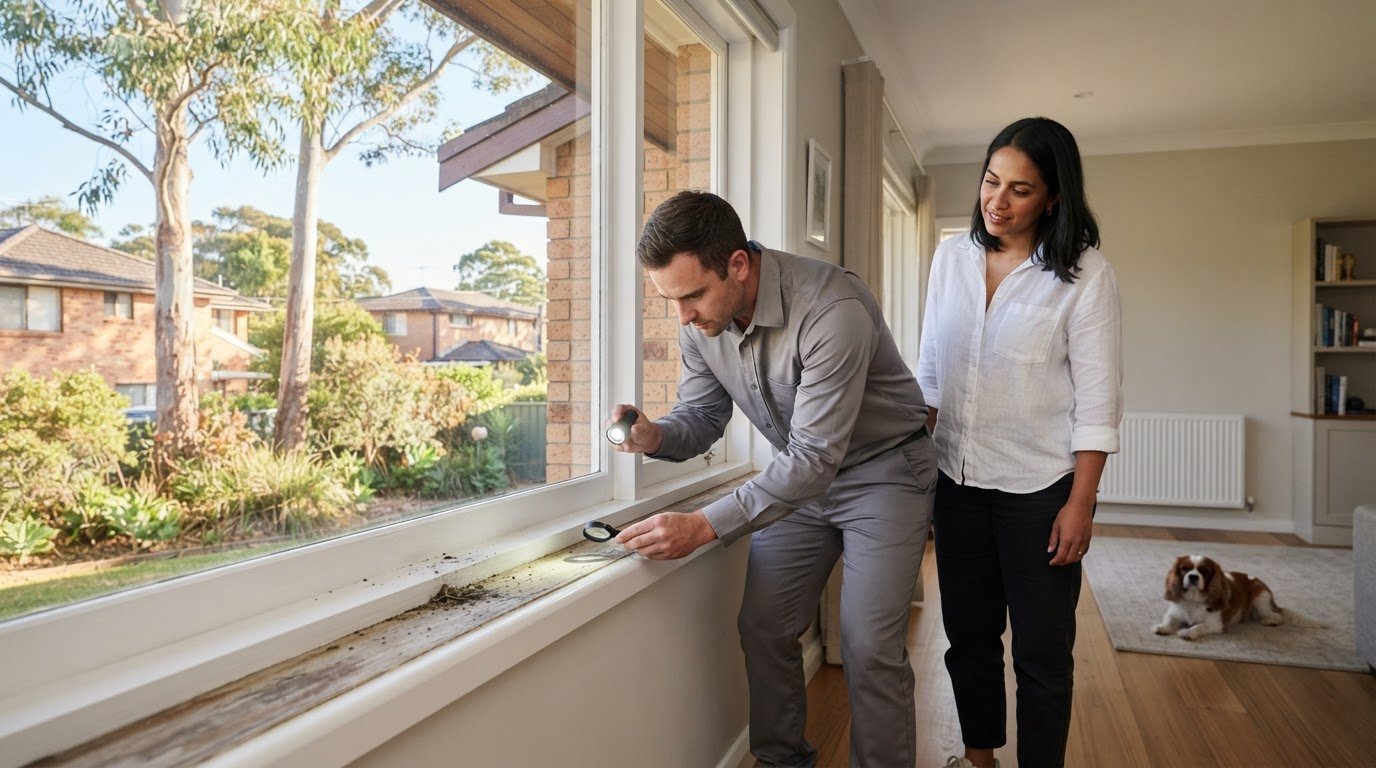
- Termite Frass: These are tiny, hexagonal pellets. They often look like small, concentrated piles of sand or sawdust collected near wooden fixtures, skirting boards, or on windowsills.
- Kick-out Holes: Termites are tidy insects. They create pin-sized holes in the timber to eject their waste. These holes are often smaller than a match head and can be very difficult to spot without bright light.
- Hollow-Sounding Wood: Tap on your structural beams, door frames, or skirting boards. If you hear a “papery” or hollow echo, the termites have likely hollowed out the wood from within, leaving only a thin outer shell.
- Discarded Wings: During warm Sydney evenings, reproductive termites (swarmers) leave the colony to find a mate and start new nests. You will find their translucent, equal-sized wings near windowsills or light sources.
Identifying Termite Frass vs. Sawdust
Many homeowners mistake termite waste for simple sawdust from a recent renovation or a messy carpenter bee. However, the difference is clear under a magnifying glass. Frass has a distinct, six-sided geometric shape. Sawdust is irregular, fibrous, and shredded. The colour of the frass usually matches the specific timber the termites are currently eating. If you see light-coloured pellets near a pine frame or dark pellets near hardwood, you have an active gallery nearby. Piles that reappear after being cleaned away are a definitive sign that you need to know how to get rid of drywood termites immediately. This isn’t just a mess; it’s a structural warning.
Structural Red Flags in Sydney Homes
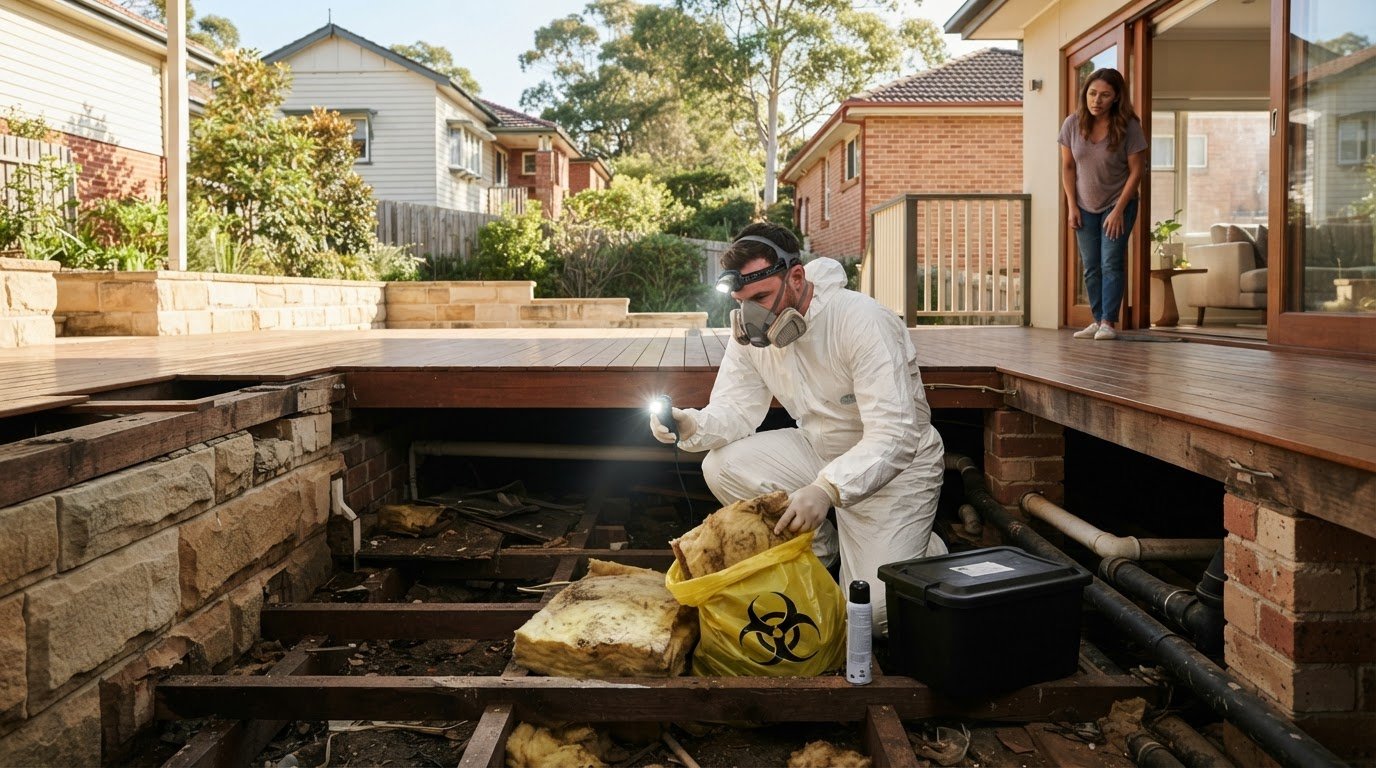
Sydney’s coastal humidity can often mask termite damage. For example, blistering paint is frequently dismissed as simple water damage or rising damp. In reality, termites often tunnel so close to the surface that the paint begins to bubble or crack. Similarly, if your windows or doors are suddenly sticking, it might not just be the seasonal weather. Termites produce moisture as they consume timber, causing the wood to swell and jam within the frame. Check “dead spots” like dark attic corners, rafters, and sub-floor areas. These are the primary zones where infestations go unnoticed for years. If these signs look familiar, it’s time to seek a professional pest assessment to confirm the extent of the colony and stop the spread.
Professional Methods: How to Get Rid of Drywood Termites Effectively
Once you have identified the tell-tale signs of an infestation, the focus must shift to total eradication. Unlike subterranean termites that require soil barriers, drywood termites demand an “internal” approach. Professional grade solutions are the only way to ensure the colony is completely destroyed. If you leave even a small cluster of survivors, they will simply relocate and continue their destructive work. Our team focuses on surgical precision to protect your home’s structural integrity. We utilize advanced technology to reach the heart of the nest without unnecessary destruction to your property.
The choice of method depends on the accessibility of the timber and the extent of the colony. For many Sydney homeowners, the goal is to resolve the issue with minimal disruption. According to the University of California’s guide to drywood termite management, localized treatments are highly effective when the galleries are accessible and the infestation is caught early. This data driven approach ensures we apply the most efficient solution for your specific situation. You don’t have to settle for guesswork when it comes to how to get rid of drywood termites safely and permanently.
Surgical Injection and Foaming
Technicians often employ a “drill and fill” technique for localized infestations. We drill small, inconspicuous holes into the active timber galleries. We then inject specialized, non-repellent termiticides directly into the wood. These chemicals are highly effective because termites cannot detect them. They walk through the treated zones and unknowingly carry the toxin back to the queen and the rest of the colony. This “transfer effect” ensures the entire nest is eliminated, not just the individuals we see. Pressure foaming is a similar method where we use expanding foam to saturate deep, winding galleries that liquid might miss. This is often the preferred choice for Sydney apartments and units where structural access is limited.
When Fumigation is Necessary
Some cases reach a “tipping point” where spot treatments are no longer sufficient. If the infestation has spread into multiple structural beams or inaccessible roof voids, whole-structure fumigation is the most reliable option. This involves “tenting” the entire building to distribute a lethal gas that penetrates every millimetre of timber. While it sounds intense, it is the only way to guarantee 100% eradication in severe cases. We follow strict safety protocols to ensure your home is pest-free and safe to re-enter without any chemical residue. For those seeking a chemical-free alternative, heat treatment is an option. This method raises the internal temperature of the timber to lethal levels, effectively cooking the termites within the wood. It’s a specialized process that requires expert monitoring to protect your home’s contents while ensuring total success.
Why DIY Methods Fail to Stop Drywood Termites
It is tempting to grab a can of supermarket bug spray when you first see evidence of timber damage. However, these surface-level solutions are practically useless against a colony living deep inside your structural beams. If you want to know how to get rid of drywood termites, you must understand that DIY methods often do more harm than good. These pests are resilient. They have survived for millions of years by hiding in the very structures we build. Attempting a quick fix without professional equipment usually results in a temporary disappearance followed by a much larger, more expensive problem later.
Surface sprays fail because they cannot penetrate the wood. They only kill the few termites they touch on the exterior. The rest of the colony remains safe in their galleries. Even worse, DIY attempts often trigger an “alarm” effect. When termites detect a repellent chemical, they retreat deeper into the structure or move to completely inaccessible areas. This makes professional treatment much more difficult. Online forums often suggest orange oil as a natural alternative. While orange oil kills on contact, it is not a systemic solution. It lacks the “transfer effect” of professional termiticides, meaning it will never reach the queen or the heart of the nest. Homeowners simply lack the specialized drills and high-pressure pumps required to saturate a colony effectively.
The Risk of Incomplete Eradication
Leaving just a few survivors alive allows the colony to rebuild within months. You might think the problem is solved, but the termites are simply working in a different corner of your home. This masking of the problem leads to severe structural failure over time. You can understand the how to get rid of bed bugs logic here. Just like bed bugs, drywood termites are masters of hiding. They require specialized pressure pumps and high-grade termiticides to ensure every single insect is eliminated. Without the right gear, you are just providing a temporary distraction while the timber continues to hollow out.
Safety and Regulatory Compliance
Handling professional-grade termiticides without proper training is dangerous for your family and pets. Australian Standards (AS 3660) were established to ensure that termite management is performed safely and effectively to protect property values. These standards require specific application rates and safety protocols that DIY kits cannot match. Unlicensed chemical application can even void your home insurance policy, leaving you fully liable for any future damage. Don’t risk your biggest investment on a gamble. Secure your property with professional termite management today to ensure the job is done right the first time.
Protecting Your Sydney Property with ABC Pest Control Sydney
Sydney’s unique architecture and coastal weather patterns demand more than a one-size-fits-all approach. ABC Pest Control Sydney has protected local homes from termite devastation for over 20 years. We understand how different timber types react to our specific environment. Our team provides customized termite control packages designed to handle the high-difficulty cases found in our metropolitan area. We address both drywood and subterranean threats to ensure your property is shielded from every angle. You need a partner who knows the local landscape as well as the pests themselves.
Annual inspections are vital in high-risk Sydney suburbs. Termites move silently. By the time you see evidence, the colony is usually well-established. Our specialized technicians know exactly how to get rid of drywood termites before they cause irreversible damage. We use eco-friendly and safe extermination methods that provide peace of mind for your family and pets. You don’t have to choose between a pest-free home and a safe environment. We deliver both through technical expertise and strict adherence to the highest Australian standards.
Our Proven Treatment Process
We follow a rigorous three-step protocol to ensure your home is secure. Our process is transparent, efficient, and results-driven. We respect your time and your property throughout every stage of the intervention. We focus on total resolution, not just a temporary fix.
- Step 1: Detection. We use comprehensive thermal imaging and moisture detection tools. This allows us to see through walls and find hidden galleries without destructive searching.
- Step 2: Targeted Treatment. We create a plan based on the specific location and size of the colony. Whether it requires pressure foaming or surgical injections, the solution is tailored to your home’s layout.
- Step 3: Verification. We conduct follow-up visits to verify total eradication. We don’t consider the job done until we are certain the colony is gone and your structure is safe.
Book Your Professional Inspection Today
Don’t wait for the evidence in your windowsills to turn into a massive structural failure. Termite damage is a race against time. The longer you delay, the deeper they tunnel into your structural beams. Contact ABC Pest Control Sydney today for a fast, professional quote and the reliability you deserve. Our experts are ready to provide the expert intervention needed to secure your property. You can also see our full range of pest control Sydney services to protect your entire property from every common household threat. Secure your peace of mind and your home’s future with a single phone call.
Take Action to Protect Your Sydney Home Today
Drywood termites don’t wait, and neither should you. You now understand that these pests require specialized internal treatments rather than simple soil barriers. By identifying the signs early and avoiding the pitfalls of DIY surface sprays, you have already taken the first step toward saving your property from structural failure. These silent invaders hollow out your timber for years before they are discovered. Immediate action is the only way to stop the damage.
Learning how to get rid of drywood termites effectively requires expert intervention to ensure the entire colony is destroyed. Our team brings over 20 years of local Sydney experience to every property we protect. We use licensed and insured technicians who prioritize eco-friendly treatment options to keep your family and pets safe. Don’t let a manageable issue turn into a massive repair bill that home insurance won’t cover.
Secure your home with a professional termite inspection from ABC Pest Control Sydney today.
Restore your peace of mind and protect your biggest investment with the help of Sydney’s trusted termite specialists. We are ready to help you reclaim your home.
Frequently Asked Questions
How can I tell the difference between drywood termites and subterranean termites?
Is drywood termite treatment expensive in Sydney?
The cost of treatment varies based on the size of the infestation and the method required to reach the colony. Localized spot treatments are generally more cost-effective than whole-structure fumigation. While we provide specific quotes after an inspection, keep in mind that the average termite repair bill in Australia is $7,200. Professional intervention now prevents those massive structural costs later.
Can I stay in my house during drywood termite treatment?
You can typically stay in your home during localized spot treatments or pressure foaming. These methods are targeted to specific timber galleries and are non-invasive for residents. However, if the infestation is severe enough to require whole-structure fumigation, you will need to vacate the property for several days. We always prioritize safe, eco-friendly methods to ensure your family’s comfort and security.
How long does it take to get rid of drywood termites?
A professional technician can often complete the initial treatment in a few hours, but total colony elimination takes several weeks. We use non-repellent chemicals that rely on the “transfer effect” to reach the queen. This systemic approach is the most reliable way to ensure you know how to get rid of drywood termites permanently rather than just killing the ones you see.
Will drywood termites come back after professional treatment?
Professional treatments are highly successful, but your home remains at risk from new swarming colonies in the future. Termites are a persistent threat throughout the Sydney metropolitan area. We recommend annual inspections to catch new reproductive “islanders” before they can establish a nest. Consistent monitoring is the best way to maintain your home’s structural integrity over the long term.
Does home insurance cover drywood termite damage in Australia?
No, 92% of home insurance policies in Australia do not cover termite damage or the cost of extermination. Most insurers view termite activity as a preventable maintenance issue rather than an accidental event. This means you’ll likely be responsible for any repair costs. Regular professional inspections are your only real financial protection against the devastating impact of an undetected infestation.
What is the most effective chemical for killing drywood termites?
Non-repellent termiticides are the gold standard for eliminating drywood colonies effectively. These professional-grade chemicals are undetectable to the insects, which allows them to carry the toxin back to the heart of the nest. This is far superior to supermarket sprays that only kill on contact. Our technicians use specialized formulations that comply with Australian Standards to ensure a total resolution of the problem.
Are drywood termites common in Sydney residential areas?
Yes, drywood termites are very common in Sydney, particularly in established residential areas and humid coastal suburbs. Our local climate provides the perfect atmospheric moisture for these pests to thrive without ever touching the soil. Since 1 in 3 Sydney homes will face a termite attack, understanding how to get rid of drywood termites is essential for every local property owner.