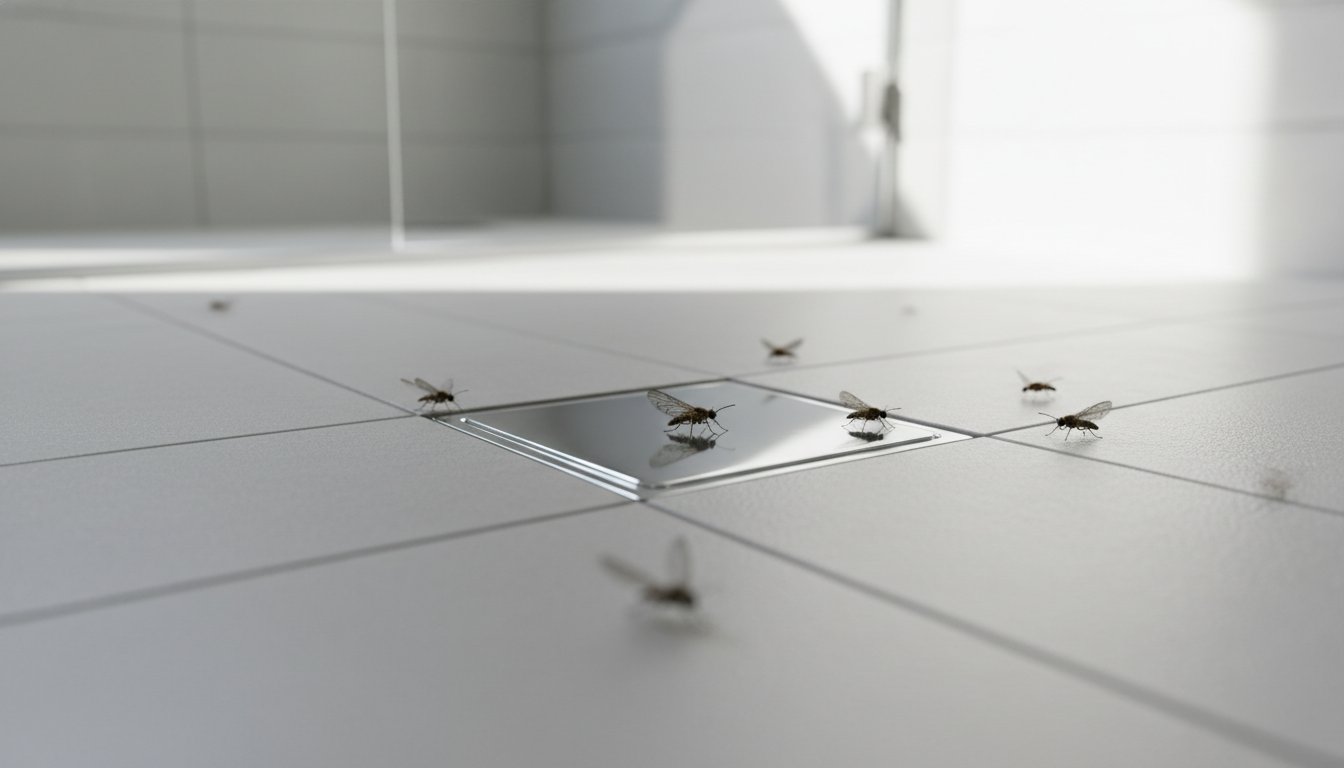
You scrub your bathroom tiles until they shine, yet you still find those fuzzy little black flies in shower recesses every single morning. It feels like a losing battle against an invisible enemy. It’s natural to feel anxious when pests persist despite regular cleaning. Many Sydney homeowners worry these insects signal a major plumbing failure or a deep-seated hygiene issue. The truth is that these flies thrive in the organic “biofilm” that builds up naturally inside pipes, regardless of how often you mop the floor.
This guide will help you positively identify these bathroom invaders and provide a clear cleaning protocol to reclaim your space. You’ll learn exactly why standard cleaners often fail and how to target the source of the infestation effectively. We also outline when the problem requires more than a home remedy. You’ll know exactly when to call ABC Pest Control Sydney to handle resilient colonies with professional-grade solutions. We will cover everything from the three-week breeding cycle to the specific mechanical steps needed to keep your shower fly-free for good.
Key Takeaways
- Identify the Psychodidae fly by its fuzzy, moth-like appearance and erratic flight to confirm a drain-based infestation.
- Learn how hair and soap scum create the thick biofilm that protects hundreds of developing larvae deep within your plumbing.
- Discover why standard household cleaners fail to eliminate little black flies in shower drains and which mechanical tools actually work.
- Master a professional two-step protocol using enzymatic solutions to dissolve the organic matter that fuels recurring pest cycles.
- Understand the link between persistent drain flies and hidden moisture problems that could attract other destructive Sydney pests.
What Are the Little Black Flies in Your Shower?
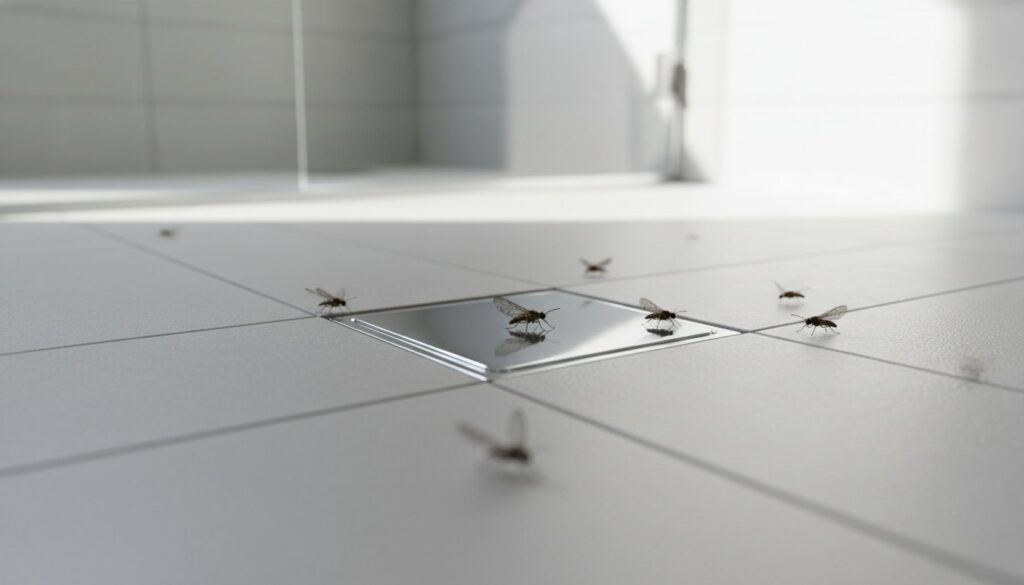
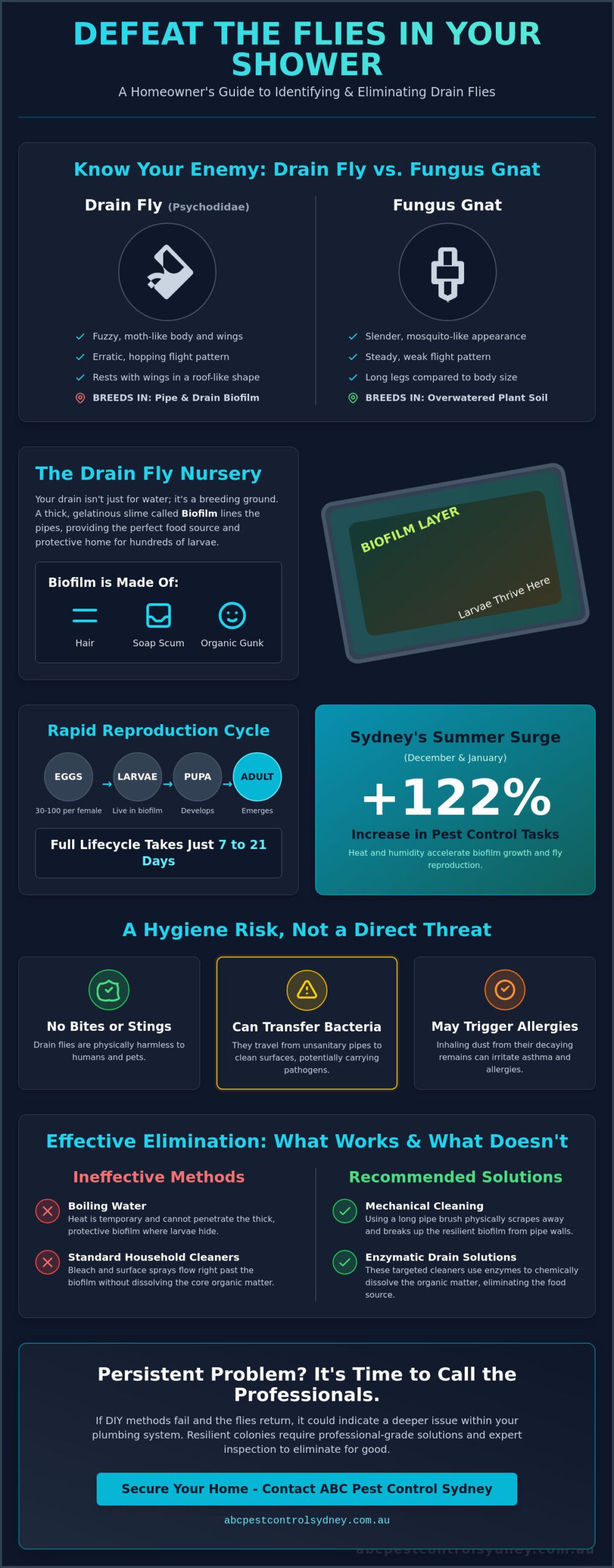
Identifying those tiny, fuzzy intruders is the first step toward a clean bathroom. If you see small, heart-shaped insects resting on your walls or mirrors, you’re likely dealing with the Psychodidae family of flies. These pests go by many names, including drain flies, moth flies, or filter flies. Their unique appearance makes them easy to spot once you know what to look for. They don’t fly in straight lines like houseflies. Instead, they make short, hopping flights that appear erratic and clumsy.
To confirm you have these specific pests, check for these physical markers:
- Fuzzy Texture: Their bodies and wings are covered in tiny hairs, giving them a moth-like look.
- Wing Shape: They hold their leaf-shaped wings in a roof-like position over their bodies when resting.
- Size: Most adults are roughly 2 to 5 millimetres long.
- Colour: They typically appear as dark grey or black specks against light-coloured tiles.
These flies don’t just appear out of nowhere. They emerge from a thick, gelatinous film called biofilm that lines your pipes. A single female can lay between 30 and 100 eggs at a once. In Sydney’s humid summer months, the lifecycle from egg to adult can take as little as seven to 21 days. This rapid reproduction explains why you might see a sudden explosion of little black flies in shower areas during December and January. In fact, Sydney sees a 122% increase in pest control tasks during these peak summer months due to the heat and moisture.
Drain Flies vs. Fungus Gnats: Know the Difference
It’s easy to confuse these pests, but the treatment strategies are completely different. Drain flies are wide and fuzzy. Fungus gnats have long legs and look more like tiny mosquitoes. While drain flies live in your plumbing, fungus gnats breed in the overwatered soil of indoor plants. Identifying the source is critical for success. Treating a drain won’t stop gnats coming from a pot plant. Look at the wings; if they are wide and hairy, it’s a drain fly.
Are These Flies Harmful to Your Health?
These pests do not bite or sting humans. However, their presence is a warning sign of unsanitary conditions. Because they breed in sewage and decomposing organic matter, they can mechanically transfer bacteria to your bathroom surfaces. Some residents also experience asthma triggers or allergic reactions from inhaling dust containing their decaying remains. While they aren’t a direct medical threat, they represent a hygiene risk that requires immediate action to prevent food contamination or respiratory irritation.
Why Your Shower Drain is a Breeding Ground
Your shower drain isn’t just a conduit for water; it’s a complex biological nursery. The primary reason you see little black flies in shower recesses is the presence of biofilm. This thick, gelatinous slime attaches to the inside of your pipes, created by a mixture of hair, soap scum, and dead skin cells. This organic “gunk” provides both the food source and the protective environment needed for larvae to thrive. Unlike surface dirt, biofilm is incredibly resilient and sticks to the PVC or metal lining of your plumbing even when water is running.
Sydney’s specific climate significantly accelerates this process. Our high humidity and warm temperatures, particularly during the peak summer months of December and January, act as a catalyst for organic decomposition. When the air is heavy with moisture, the common sources of drain flies become more active as the slime in your pipes stays wet and nutrient-dense. This explains why Sydney records search volumes for pests at a rate of 7,386 per 100,000 people; our environment is simply more conducive to these infestations than cooler, drier regions.
Guest bathrooms and rarely used showers are the most vulnerable targets. In a frequently used shower, the constant flow of water can occasionally dislodge loose debris. However, in a stagnant drain, the water in the P-trap evaporates or sits still, allowing the biofilm to thicken undisturbed. This provides a stable platform for adult flies to lay their eggs without the risk of them being washed away. If you notice a sudden swarm in a spare room, the plumbing has likely become a primary breeding hub.
The Role of Clogged and Slow Drains
Partial clogs are a major contributor to fly populations. When hair and soap create a slow-moving drain, they trap even more organic matter, thickening the nursery walls for larvae. Many Sydney homeowners try pouring boiling water down the drain to solve the issue. This rarely works because the heat doesn’t last long enough to strip away the protective biofilm. To truly resolve the problem, you need to break down the physical structure of the slime. If your DIY efforts aren’t working, a professional drain fly Sydney treatment can eliminate the colony at its source.
Hidden Breeding Sites Beyond the Drain
Don’t stop your inspection at the drain grate. These flies are opportunistic and will breed anywhere moisture and organic decay meet. Check under the shower tray if there’s any sign of a leak, or behind loose wall tiles where water might seep. Leaking pipes within a wall cavity are a hidden Sydney pest hotspot that can support thousands of larvae. Always inspect floor wastes in laundries and the overflow pipes in your sinks, as these areas often go months without being cleaned, making them perfect secondary breeding sites.
DIY Methods vs. Professional Pest Control
When you spot those persistent little black flies in shower drains, the first instinct is to reach for the pantry. A popular DIY diagnostic tool is the “Tape Test.” Simply cover your drain opening with clear adhesive tape before you go to bed, leaving a small gap for airflow. If you find flies stuck to the underside in the morning, you’ve confirmed that specific drain is the breeding source. This simple step prevents you from wasting effort treating drains that aren’t actually infested.
Many Sydney residents rely on vinegar and baking soda, but these home remedies provide little more than a temporary fizz. While they might kill a few larvae on contact, they lack the chemical strength to strip away the stubborn biofilm that protects the colony. For a more effective DIY approach, biological enzyme-based cleaners are superior to caustic chemicals. Enzymes literally “eat” the organic matter, whereas harsh acids can damage the integrity of older Sydney plumbing systems. For detailed research on these methods, scientific resources on Drain fly identification and management emphasize that total eradication requires targeting both the hidden larvae and the airborne adults simultaneously.
When DIY Efforts Fail: The Tipping Point
Don’t ignore the 7-day rule. If you’ve cleaned the drain and applied enzyme gels but still see little black flies in shower recesses after a week, the problem has likely moved beyond the pipes. This is the tipping point where DIY efforts fail. Persistent populations often indicate the flies have found secondary breeding sites in wet sub-floors or wall cavities. Repeatedly pouring boiling water or acids into your pipes can lead to costly structural damage, especially in historic Sydney homes with original terracotta or cast iron plumbing. Stop the cycle before it results in a plumbing emergency.
Professional Solutions from ABC Pest Control Sydney
ABC Pest Control Sydney provides a specialized approach to pest control Sydney residents can trust for long-term results. We don’t just treat the symptoms. Our technicians use professional-grade Insect Growth Regulators (IGRs) to break the breeding cycle permanently. These compounds prevent larvae from reaching adulthood, ensuring the colony dies out naturally. We integrate these targeted treatments into our General Pest Control Packages, providing a comprehensive shield for your entire home. Reclaim your bathroom peace of mind with a professional solution that addresses the root cause immediately.
Step-by-Step Guide to Eliminating Drain Flies
Eliminating little black flies in shower drains requires more than a quick rinse with bleach. You must systematically destroy the biological environment where they thrive. If you leave even a small patch of biofilm behind, the population will rebound within days. Follow this professional five-step protocol to reclaim your bathroom and stop the breeding cycle for good.
- Step 1: Mechanical Cleaning. Use a long-handled pipe brush to physically scrub the inside of the drain. This is the only way to break the structural integrity of the slime lining your pipes.
- Step 2: Apply Biological Cleaners. Pour a professional-grade enzymatic drain gel down the pipe. These products contain living bacteria that digest organic matter, reaching the crevices your brush might miss.
- Step 3: Eliminate Adult Flies. Kill any visible adults using a vacuum or fly swatter. Removing the adults immediately prevents them from laying up to 100 new eggs in nearby moist areas.
- Step 4: Control Bathroom Humidity. Run your exhaust fan for at least 20 minutes after every shower. Reducing ambient moisture makes the environment less attractive to new colonisers.
- Step 5: Ongoing Monitoring. Perform a visual check every morning. If you see new little black flies in shower areas after 48 hours, you likely missed a secondary breeding site in a floor waste or overflow pipe.
How to Properly Clean a Shower Drain
Start by removing the drain grate entirely. Many homeowners skip this step, but the underside of the grate is often the most heavily infested area. Use the “Scrub and Flush” technique: scrub vigorously with a stiff brush, then flush with a bucket of hot water to move the loosened debris through the P-trap. Avoid using traditional “drain snakes” for this specific problem. While snakes are great for hair clogs, they simply poke a hole through the biofilm rather than stripping it from the pipe walls.
Preventative Maintenance for a Fly-Free Bathroom
Keep your plumbing clear by implementing a weekly maintenance routine. A simple flush with a gallon of near-boiling water can help melt away fresh soap scum before it hardens into a nursery. Install fine mesh drain covers to catch hair and skin cells, which are the primary food sources for larvae. In Sydney’s coastal suburbs, sea breezes can carry moisture deep into your home, so ensure your bathroom window stays cracked open to promote cross-ventilation and keep surfaces dry.
If your DIY efforts haven’t stopped the swarm, you need an expert intervention. Contact the specialists at ABC Pest Control Sydney to eliminate the infestation at its source today.
Secure Your Sydney Home from All Seasonal Pests
Finding little black flies in shower recesses is often a warning sign of deeper environmental issues within your property. These insects act as “gateway pests,” signaling that moisture levels and organic decay are high enough to support a thriving colony. If your bathroom provides a suitable habitat for drain flies, it likely attracts more invasive species as well. Addressing the flies is a critical first step in maintaining a sanitary home, but it shouldn’t be the last.
Persistent moisture from bathroom leaks or slow drains doesn’t just feed fly larvae. It creates the perfect conditions for subterranean termites. These wood-destroying insects are drawn to damp environments where timber has begun to soften. We strongly advise homeowners to schedule a professional termite inspection Sydney wide if they discover recurring moisture-loving pests. Protecting your home’s structural integrity requires an expert eye that looks beyond the surface of your tiles.
Our comprehensive service model handles the full spectrum of Sydney’s seasonal challenges. From targeted drain treatments to advanced cockroach pest control, we provide a total resolution for your property. We utilize eco-friendly Sydney pest solutions that are specifically designed to be safe for children and pets. Our goal is to provide peace of mind through reliable intervention and long-term preventative strategies.
The ABC Pest Control Difference
We bring over 20 years of experience to the Sydney metropolitan area. Our professional persona is built on technical training and a deep understanding of local pest behaviors. We project reliability and efficiency in every interaction. Our modern booking platform allows you to schedule an inspection in under 60 seconds, respecting your time and urgency. By adhering to national regulatory standards, we ensure that every treatment is both effective and environmentally responsible.
Ready for a Pest-Free Home?
Don’t let a minor nuisance turn into a major infestation. Those little black flies in shower drains can quickly multiply and contaminate your living spaces. Secure your property today with a fast, professional response from a seasoned authority. We offer tiered service bundles to simplify your decision-making process and provide maximum value. Take action now to reclaim your bathroom and protect your family from seasonal pests. Book Your General Pest Control Package Today and experience the peace of mind that comes with expert protection.
Reclaim Your Bathroom Sanctuary Today
Dealing with little black flies in shower recesses is a frustrating experience that signals a deeper biological issue in your plumbing. You’ve learned that mechanical scrubbing is essential to break down the biofilm that protects developing larvae. While DIY enzyme cleaners provide a great starting point, persistent infestations often require professional-grade intervention to break the breeding cycle for good. Don’t let a minor nuisance escalate into a larger moisture-related pest problem.
ABC Pest Control Sydney brings over 20 years of local expertise to every property we visit. We use safe, eco-friendly extermination methods to protect your family and pets. Our comprehensive 15-pest protection packages offer total peace of mind for your entire home. Stop the swarm and restore your bathroom’s hygiene immediately. Get a Fast Quote for Your Sydney Pest Control Package Today and enjoy a fly-free home. You deserve a clean, healthy space without the stress of recurring pests.
Frequently Asked Questions
How do I know if I have drain flies or fruit flies?
Drain flies have fuzzy, moth-like bodies and wide wings, while fruit flies are smaller with distinct red eyes. You’ll find drain flies resting on bathroom walls or mirrors near the source of moisture. Fruit flies typically congregate in kitchens around ripened produce or rubbish bins. If you see little black flies in shower areas, they are almost certainly drain flies breeding in your plumbing biofilm.
Will bleach kill the little black flies in my shower?
Bleach is rarely effective for long-term control because it doesn’t strip away the thick, protective biofilm. While it might kill a few adult flies on contact, the liquid flows over the gelatinous slime without penetrating it. The larvae remain protected inside the pipes and continue to develop. You need mechanical scrubbing or enzymatic cleaners to actually dissolve the breeding ground and stop the cycle.
How long does it take to get rid of a drain fly infestation?
Total eradication usually takes between seven and 21 days. This timeframe matches the natural life cycle of the fly from egg to adult in Sydney’s humid climate. You must maintain a strict cleaning schedule during this period to ensure no new eggs are laid. If the population persists beyond three weeks, the infestation has likely spread to hidden areas like sub-floors or wall cavities.
Why do the flies keep coming back even after I clean the drain?
Flies return because the underlying biofilm was not fully removed during your initial cleaning. Even a small patch of organic slime can support hundreds of new eggs. They may also be emerging from secondary sites like floor wastes, laundry tubs, or air conditioning condensate lines. A professional inspection identifies these hidden hotspots that standard household cleaning often misses, ensuring the entire colony is destroyed.
Are drain flies a sign of a broken sewer pipe?
Not necessarily, but it is a possibility you should investigate if DIY methods fail. Most infestations are limited to the “P-trap” or the first few meters of pipe. However, if flies emerge from under floorboards or through cracks in the slab, it could indicate a cracked pipe leaking sewage into the soil. Check for foul odors or persistent dampness in the sub-floor area as a warning sign.
Can drain flies live in my toilet or sink as well?
Yes, drain flies can inhabit any plumbing fixture that collects organic matter and stays moist. Sinks, toilets, and floor wastes are all potential nurseries for larvae. The little black flies in shower drains are often found in bathroom sinks simultaneously because the plumbing systems are connected. Inspect every drain in the room using the adhesive tape test to confirm which pipes require treatment.
What is the fastest way to kill adult drain flies?
Vacuuming is the fastest way to remove adult flies without spreading bacteria across your bathroom surfaces. Use a hose attachment to suck them off walls and mirrors immediately to stop them from laying up to 100 new eggs. While this provides immediate relief from the nuisance, it only addresses the symptoms. You must treat the larvae in the drain biofilm to stop the population from rebounding.
Does ABC Pest Control Sydney offer a guarantee on fly treatments?
ABC Pest Control Sydney focuses on providing high-quality, professional results through our General Pest Control Packages. We pride ourselves on technical excellence and strict adherence to national industry benchmarks. Contact our team directly to discuss the specific details of your treatment plan. We provide clear, honest communication about what results you can expect for your property based on the severity of your infestation.